1. Plant
Copper cord, horizontal run, or fiber identifier. State length and connector.
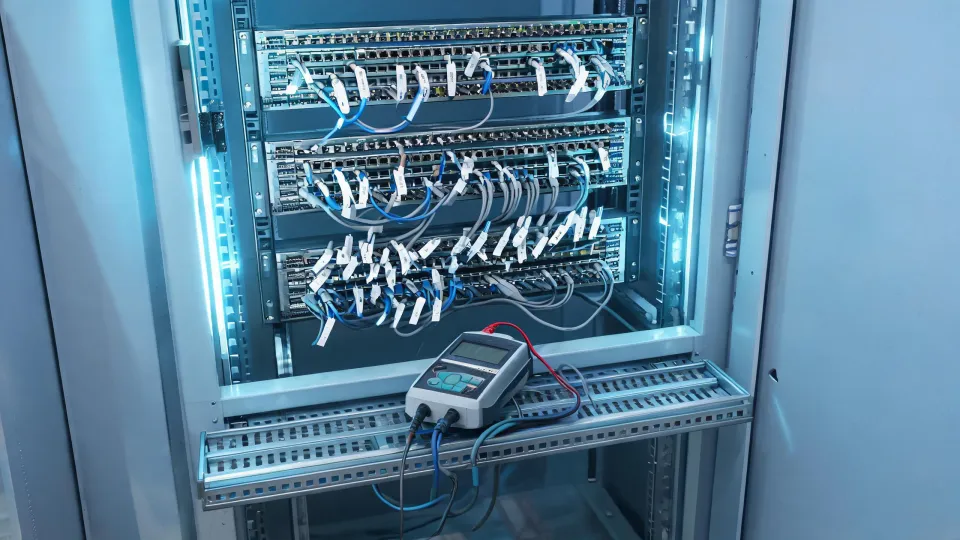
A continuity tester ethernet brief starts from the plant job: identify an open pair, map a patch cord, or confirm a horizontal run before a certifier is scheduled. LinkScope Sourcing 60 is an independent sourcing partner. It translates that job into quote lines. It does not certify the channel.
Background for a sourcing scenario, not a completed customer project: a US integrator is labeling a floor of Category 6 patch cords and wants a continuity check before the certifier day. Process: the buyer writes length bands (for example 1 m, 3 m, and 7 m cords), connector style, quantity, and the US ship-to. Result to request from suppliers: a named tester or pen, whether it shows pair mapping, and which failures it cannot see. Throughput, switching capacity, and forwarding rate are switch questions, not continuity questions.
| Method | What to ask it to show | What it does not show | Evidence |
|---|---|---|---|
| Copper continuity pen | Open or short on a pair, often with an audible tone | Pair map, return loss, or a 1 Gb/s data rate | Safety category and range on that model sheet |
| Wiremap continuity tester | Opens, shorts, and split pairs on the quoted adapter | Insertion loss across frequency, alien crosstalk, or PoE wattage | Adapter list and the cable categories the manual names |
| Fiber identifier with remote | Strand identification on the stated wavelength | Ethernet packet loss or an optical budget for a live service | Remote pairing note and wavelength, such as 1310 nm |
Frequency range on a copper certifier, if someone later adds that tool, must be quoted as its own line. Impedance and VSWR belong to RF plant, not to this Ethernet continuity step. Receiver sensitivity and transmit power belong to an optical module, not to a tone remote.
A managed-network team may want the tester result stored with a port label so the closet record matches the switch policy. An unmanaged closet may accept a handheld beep with no software. The extra software can add a license line and a laptop dependency. The beep-style tool can miss a split pair the label later hides. Quote both behaviors if both closets exist. Do not assume one site standard.
New sets can include current adapters for the connector on the patch panel. Refurbished sets can be considered when a legacy adapter is scarce, if the seller lists worn ports, battery age, and whether calibration traceability still has a date range. A lower unit price with a dead adapter is not a comparable offer.
Site constraints to confirm: ladder or cabinet access, whether the check is live or dark fiber, and who signs the incoming inspection. Packing should keep adapters with the serial number on the certificate. Commissioning, if any, is a separate line from the instrument price.
Limits: continuity on a cord is not channel certification under a cabling standard; a tone on fiber is not a service turn-up; this desk does not visit the closet. TIA-568 is a question source for cabling language, not a test report this site can issue. Use the product names that match the method you actually need.
Copper cord, horizontal run, or fiber identifier. State length and connector.
Write the failure the buyer must catch, and the failures that can wait for another tool.
US ship-to, quantity, timing, currency, and any per-unit or whole-order budget.
Then send the brief. Suppliers should mark deviations instead of swapping in a certifier under a continuity name.
Qualified briefs can include sourcing support of up to 3%.
Eligibility applies to qualified business buyers and is confirmed after we review your product, quantity, destination, and sourcing requirements.
Prepare a Telecom RFQ